Sheet Metal Fabrication
In Liverpool.
Cut, folded and assembled sheet metal for commercial equipment, enclosures and fit-out work. Start with the material, the finished dimensions and the details that need to line up.
Discuss This Service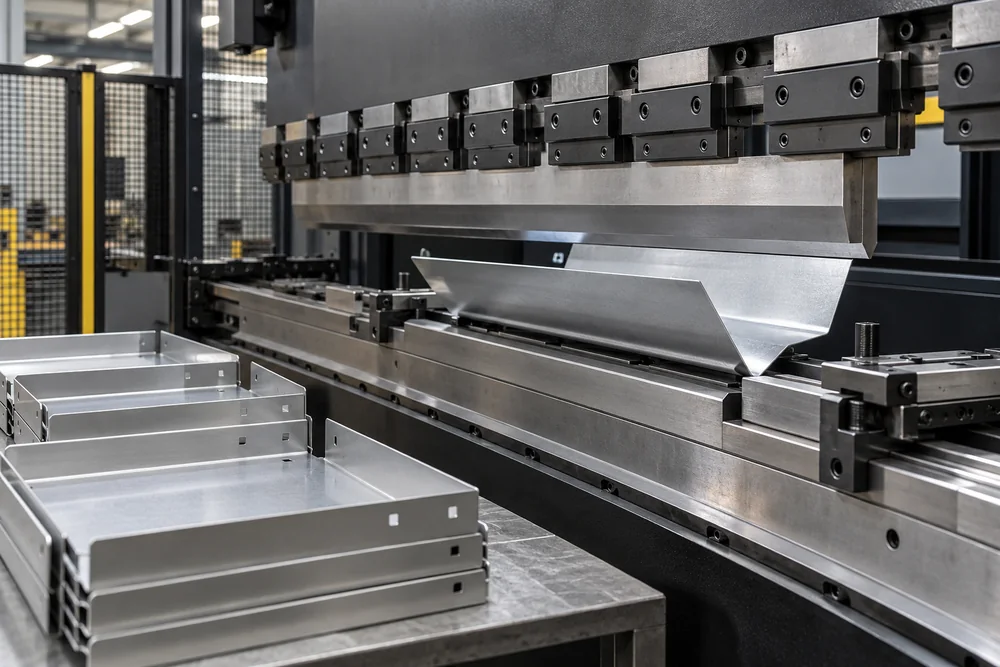
- SCOPE
- Panels / Trays / Enclosures
- MATERIAL
- Steel / Stainless / Aluminium Sheet
- SECTOR
- Equipment, Plant & Commercial Interiors
From Flat Sheet To Finished Component
Sheet metal fabrication produces panels, folded sections and assembled parts from metal sheet. Typical business enquiries in Liverpool include equipment covers, drip trays, enclosure panels, equipment surrounds and fit-out components. The finished part needs to be defined by its purpose, dimensions and interface with the equipment or building around it.
The flat pattern and the finished dimensions are different pieces of information. Bending changes how material is developed, and the bend radius depends on the material and tooling. Supply your finished requirements and let the production detail establish the correct blank, rather than assuming a folded part can be made from a simple outline.
Material, Thickness And Surface Finish
The grade and thickness of sheet influence stiffness, forming and the way edges are finished. A thin cover can behave differently once holes, openings or long unsupported spans are introduced. Give the fabricator the component’s use and any deflection or handling requirements instead of choosing a thickness from appearance alone.
Stainless steel, mild steel and aluminium each need an appropriate specification. If a visible finish matters, identify the viewing side, grain direction and acceptable marking before processing. Protective film and careful packaging may help preserve the surface, but they should be included in the agreed scope rather than assumed.
Getting The Detail Right
For an enclosure, provide the location of cable entries, fixings, hinges and removable panels. Clearances need to allow installation and future servicing, not just the initial fit. If a part must align with existing equipment, identify which dimensions are fixed and which can be adjusted.
Trays may need falls, sealed corners or drainage connections, depending on their purpose. A folded tray is not automatically leak tested, and an enclosure is not automatically certified for a particular ingress protection rating. State any performance requirement and agree how it will be tested before the work is priced.
Standards And Workshop Safety
Not all sheet metal parts are structural construction products. BS EN 1090 requirements should be considered where a component falls within the relevant structural scope, rather than applied to every enclosure or cover. Any special hygienic, electrical or fire performance requirement also needs its own appropriate design and acceptance criteria.
For cutting, forming and welding, safe machinery use and fume control are important. The Provision and Use of Work Equipment Regulations 1998 concern the suitability and safe use of work equipment. HSE welding guidance explains the controls needed where welding fume is produced, including extraction and respiratory protection where required.
The Sheet Metal Production Sequence
First, the drawing review confirms the part’s overall dimensions, bend directions, tolerances and quantity. A marked viewing face and clear revision reference reduce ambiguity. For assemblies, agree the position of welds, seams and fixings, together with which surfaces need a clean visual finish.
The sheet is then cut and any holes or profiles are produced before folding where the chosen process requires it. The bend sequence needs room for the part and the press tooling. Details that look straightforward on a flat drawing can become difficult when later bends restrict access.
Assembly, deburring and surface treatment follow the agreed production method. Final checks should cover critical dimensions, sharp edges, hole alignment and finish. Where a trial fit is necessary, identify who provides the mating part and when the check happens before the full batch is released.
What Affects Price And Programme
Material type, sheet utilisation, thickness and quantity affect the initial scope. The number of setups, bend complexity, small features and tight tolerances also influence workshop time. Requiring every edge and face to have a decorative finish can add work beyond a normal functional component.
Ask whether the quotation includes drawing development, welding, coating, packaging and any performance tests. A production date can only be agreed once material and approved details are available. If an enclosure depends on another supplier’s equipment, allow time to confirm its final dimensions.
For heavier frames that support a sheet metal assembly, see metal fabrication. If each component must suit a unique location, our bespoke steel fabrication guide explains how to define site interfaces and responsibilities before placing an order.
Set Out Acceptance And Delivery Requirements
List the dimensions that control the fit, rather than applying a tight general tolerance to every feature. A fixing pattern, panel opening or flange position may be more important than the overall blank size. Discuss any appearance requirement separately so inspection can distinguish functional dimensions from cosmetic details.
For multiple panels, provide a part schedule and identify handed versions or different hole patterns. Packaging should keep finished faces apart and allow the site team to recognise each part without removing all protection. Ask whether labels, assembly instructions or matching fixings are included where the components will be fitted by another contractor.
A Better Brief.
A Clearer Quote.
- Site postcode and access details
- Latest drawings or a measured sketch
- Material and finish requirements
- Quantity and intended use
- Delivery or installation scope
- Your target project programme
Still at an early stage? Tell us what is confirmed and what needs resolving.
Your Questions, Answered
Can Sheet Metal Parts Be Made From A Sketch?
Sheet metal parts can be discussed from a dimensioned sketch, provided it identifies the intended use and finished size. The production drawing will still need material, thickness, bend and fixing details before manufacture. If a component must mate with existing equipment, confirm the critical dimensions and any tolerances rather than relying on approximate measurements.
Are Fabricated Sheet Metal Trays Watertight?
Fabricated sheet metal trays are watertight only when their design, seams and testing have been specified for that purpose. A folded tray may have open corners or unsealed joints. Tell the fabricator what liquid it will contain, its operating conditions and any required test method before agreeing the fabrication and finish.
Put Your Steelwork
Into Motion.
Tell us what you need, where it is going and what you already have specified.